
ZARZALEJOS CALLS FOR A CULTURE OF CONSENSUS AT THE EU PARLIAMENTARY DEMOCRACY FORUM
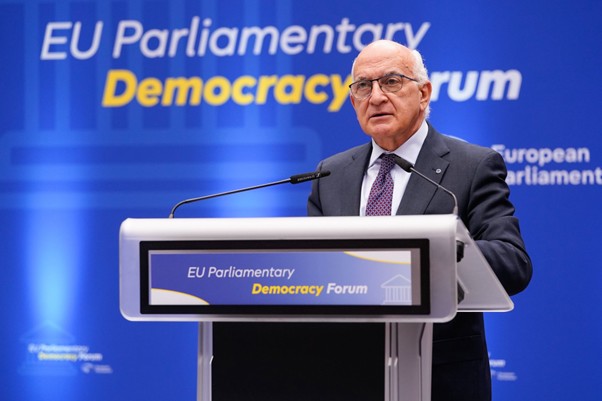
At the EU Parliamentary Democracy Forum, held on Wednesday, 19 November, the Chair of the Committee on Civil Liberties, Justice and Home Affairs (LIBE), Javier Zarzalejos, underscored the need to strengthen Europe’s democratic culture in the face of rising political polarization. During his address, he thanked the President of the European Parliament, Roberta Metsola, for organizing a meeting that, in his view, comes at a critical moment for the Union’s democratic health.
Zarzalejos warned that polarization not only undermines the quality of public debate but also directly affects the legislative functioning of the European institutions. Drawing on his experience leading the LIBE Committee, he stressed that the political, ideological, and national diversity that characterizes the European Parliament is the source of its legitimacy, but also requires a constant commitment to negotiation and consensus. He recalled that the European parliamentary method is based on the ability to reach agreements and on a willingness to anchor discussions in arguments, evidence, and proportionality.
The MEP highlighted that polarization affects the legislative process at various levels: it alters the nature of debates, makes it harder to build majorities, and can erode trust in institutions. He pointed out that proceedings increasingly require dedication and diplomacy to prevent legislative progress from being blocked. He also insisted that in particularly sensitive areas—such as migration, security, or fundamental rights—it is essential for Parliament to uphold legal rigor and mutual respect as guiding principles.
Finally, Zarzalejos stressed the need for European parliaments to strengthen a culture of consensus and reaffirm the democratic value of compromise. In this regard, he called on political representatives to preserve institutional effectiveness without abandoning pluralism, fostering healthy disagreement while avoiding dynamics that undermine the legitimacy of political opponents.