
MEETING WITH HIS HOLINESS POPE LEO XIV AT THE VATICAN
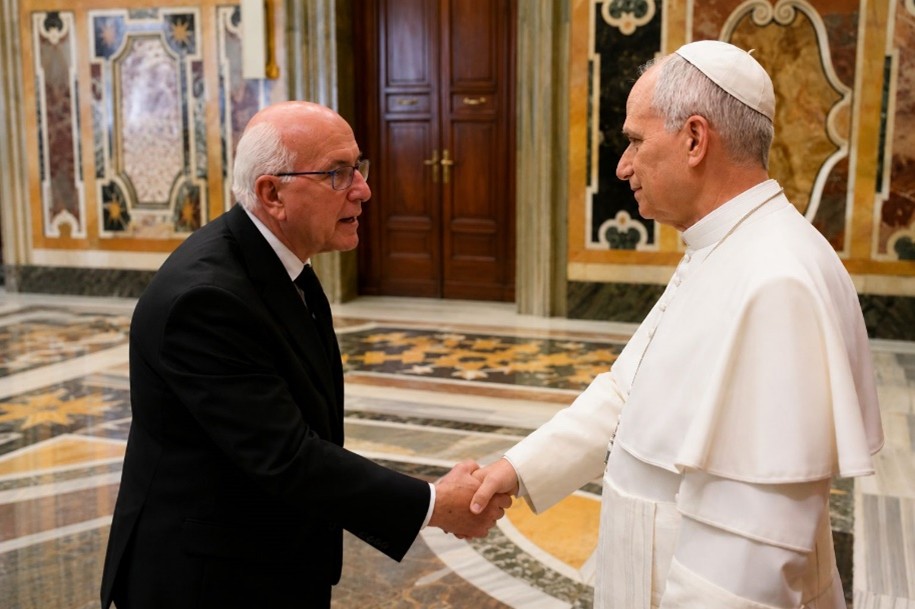
The European People’s Party (EPP) travelled to the Vatican for a series of reflection sessions on the future of Europe, the role of Christian values, and the major international challenges facing the European Union. The visit culminated in a private audience with His Holiness Pope Leo XIV, at a time marked by geopolitical uncertainty and growing international calls for peace.
Ahead of the meeting, EPP Group Chairman in the European Parliament Manfred Weber emphasised that the Pope represents “an important moral authority and a symbol of peace” in turbulent times. Weber also stressed the need to preserve Christian roots and values as the foundation of the European project and Europe’s shared identity.
During the sessions, Members of the European Parliament met with prominent representatives of the Church and experts in Catholic social teaching to discuss Europe’s responsibility in the world, the defence of human dignity, and the strengthening of intercultural and interreligious dialogue. Participants included Cardinal Claudio Gugerotti, President of the Pontifical Academy of Social Sciences Helen Alford, as well as representatives from various dicasteries of the Holy See.
The MEPs also addressed religious freedom as one of the essential pillars of the European way of life, together with the European Union’s newly appointed Special Envoy for the Promotion of Freedom of Religion or Belief outside the EU, Mairead McGuinness.
For her part, MEP Željana Zovko noted that the audience with the Holy Father came “at a crucial moment, when the world is calling for peace” — a peace based not only on the absence of conflict, but also on justice, dignity, and solidarity among peoples. In this regard, she advocated forgiveness, dialogue, and preventive diplomacy as indispensable tools for building lasting peace and overcoming divisions.
Through this institutional visit, the EPP reaffirmed its commitment to defending the humanist and Christian values that have historically inspired the European project, as well as to promoting peace, religious freedom, and dialogue between cultures.