
FIGHT AGAINST DRUG TRAFFICKING TAKES CENTRE STAGE DURING LIBE COMMITTEE VISIT TO COLOMBIA
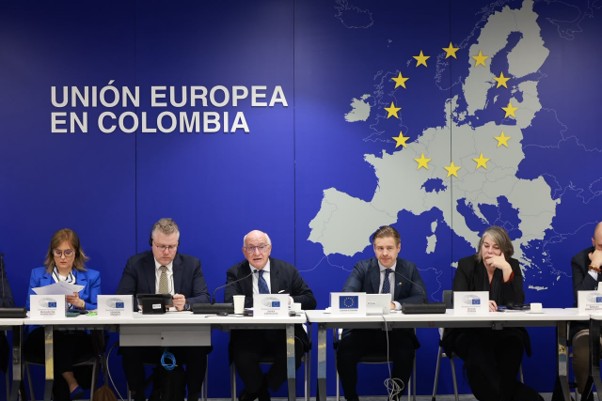
The Chair of the European Parliament’s Committee on Civil Liberties, Justice and Home Affairs (LIBE), Javier Zarzalejos, took part in an official mission to Colombia from 26 to 28 October, visiting Bogotá and Cartagena. The mission sought to gain first-hand insight into the challenges posed by drug trafficking and to strengthen cooperation between the European Union and Colombia in tackling organised crime.
Colombia is the world’s leading producer of cocaine, while the European market for the drug generates at least €10.5 billion annually, fuelling criminal networks that have a direct impact on European security.
In Bogotá, the parliamentary delegation met representatives of the Colombian Government, Congress and the Office of the Attorney General, as well as officials from the United Nations, civil society organisations and security experts. The meetings focused on the main challenges in combating drug trafficking, particularly police and judicial cooperation, corruption and money laundering. Human trafficking, the security situation in Colombia and the consequences of violence linked to armed groups were also discussed.
One of the central issues during the visit was strengthening judicial cooperation between the European Union and Colombia, particularly following the conclusion in June 2026 of a cooperation agreement with Eurojust, the EU agency responsible for facilitating coordination between judicial authorities. This agreement, which will require the European Parliament’s approval, will improve information-sharing and facilitate cross-border investigations into criminal organisations.
The delegation also visited the port of Cartagena, one of Colombia’s main logistics hubs and a strategic location for international maritime trade. There, members learned about container inspection systems and control procedures designed to detect illicit shipments. The visit included a meeting with the International Centre for Research and Analysis against Maritime Drug Trafficking (CIMCON), to gain a deeper understanding of the routes used by criminal networks and the cooperation mechanisms for combating drug trafficking to Europe.
The mission forms part of the European Drugs Strategy 2026–2030, which identifies stronger international cooperation, port infrastructure security and the fight against organised crime as priorities. The institutional meetings and operational visits provided the LIBE Committee with insights for its legislative and parliamentary scrutiny work, particularly regarding police and judicial cooperation with third countries and the development of a coordinated European response to transnational drug trafficking.