
DEVELOPMENTS IN THE EUROPEAN UNION’S LEGAL ARCHITECTURE
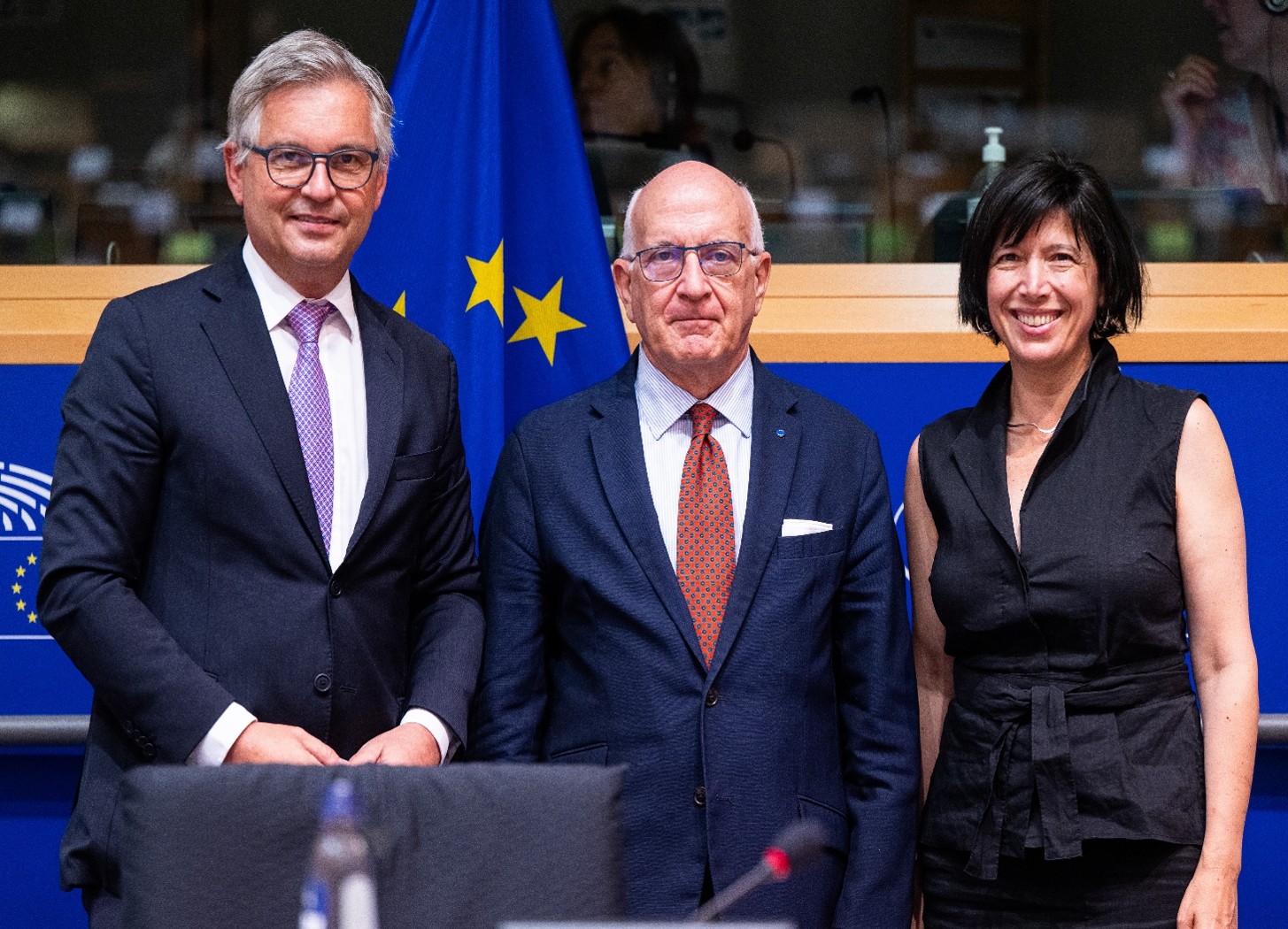
On 24 and 25 June, the European Parliament’s Committee on Civil Liberties, Justice and Home Affairs (LIBE) held a meeting at which the foundations were laid for a transformation of security, judicial cooperation and technological oversight in the European Union. The discussions focused on four main areas: digital sovereignty, strengthening Europol, reforming judicial cooperation and designing the future anti-corruption strategy.
Executive Vice-President Virkkunen and technological sovereignty
The first major area of discussion focused on the structured dialogue with Henna Virkkunen, Executive Vice-President of the European Commission for Tech Sovereignty, Security and Democracy. Virkkunen presented the EU’s roadmap for taking a leading role in artificial intelligence and cloud computing, highlighting the recent proposal for the AI and Cloud Development Act (CADA), presented in June 2026. The legislation seeks to consolidate European data sovereignty in the face of foreign technology giants.
The implementation of the Digital Networks Act (DNA) and progress in protecting children online were also discussed. Regarding the latter, Virkkunen referred to the age-verification measures advocated by the European Commission within the framework of the Regulation to prevent and combat child sexual abuse.
A stronger and more operational Europol
The European Union’s traditional and digital security requires more powerful tools for police coordination. In this regard, Commissioner for Internal Affairs and Migration Magnus Brunner presented the proposal to strengthen Europol’s mandate.
The initiative aims to turn Europol into a “truly operational” law-enforcement agency, with the long-term objective of doubling its staff in order to strengthen the capabilities of national law-enforcement authorities. The reform seeks to improve the agency’s technological capacity to combat emerging threats, enhance cooperation with third countries and the private sector, and introduce much stricter mechanisms for democratic scrutiny and oversight.
Reforms to judicial cooperation
Cross-border justice is facing new challenges as a result of increasing digitalisation and the growing sophistication of criminal activity. This has led the Commission to prepare a three-pillar legislative package, which was presented to the LIBE Committee by Ana Gallego, Director-General for Justice and Consumers at the European Commission.
This ambitious reform includes, firstly, a revision of the Eurojust Regulation—Regulation (EU) 2018/1727—to give the agency a more proactive role and establish clearer rules for the international exchange of data between Member States and third countries.
Secondly, amendments are proposed to the Directive regarding the European Investigation Order—Directive 2014/41/EU—to accelerate the gathering of evidence abroad and facilitate the remote participation of suspects, accused persons and victims in judicial proceedings.
Finally, the revision of the Regulation on the protection of personal data by the EU institutions—Regulation (EU) 2018/1725, or EUDPR—will harmonise information-security standards across the Union’s justice and security agencies.
Towards a common anti-corruption strategy
The final part of the meeting was devoted to combating unlawful practices that undermine trust in institutions and democratic states governed by the rule of law. Ana Gallego led an exchange of views on the future EU Anti-Corruption Strategy, which is still awaiting final adoption by the European Commission.
The strategy is currently undergoing public consultation and aims to integrate the fight against corruption into all EU policies. The new framework will complement the Anti-Corruption Directive and seek to address existing legal gaps through non-legislative preventive measures, strengthening the rule of law in the face of organised crime.
All these measures are intended to safeguard a common area of freedom, security and justice in the years ahead.